Rising retirement age keeps Finns in work longer

The rising retirement age has led Finns to work longer. The employment rate among 63–64-year-olds has risen considerably. High earners tend to continue working beyond the minimum retirement age for an old-age pension.
According to recent statistics from the Finnish Centre for Pensions, raising the retirement age has had the desired effect. Finns are retiring later, in line with increases in the minimum retirement age for an old-age pension. They are also staying in work for longer.
The effect if the rising retirement age is particularly evident among 63–64-year-olds.
Before the retirement age was raised, the most common retirement age was 63. Since then, it has risen gradually in three-month increments, in line with the minimum retirement age. For those born in 1960 it was around 64 years and 6 months”, says Development Manager Jari Kannisto from the Finnish Centre for Pensions.
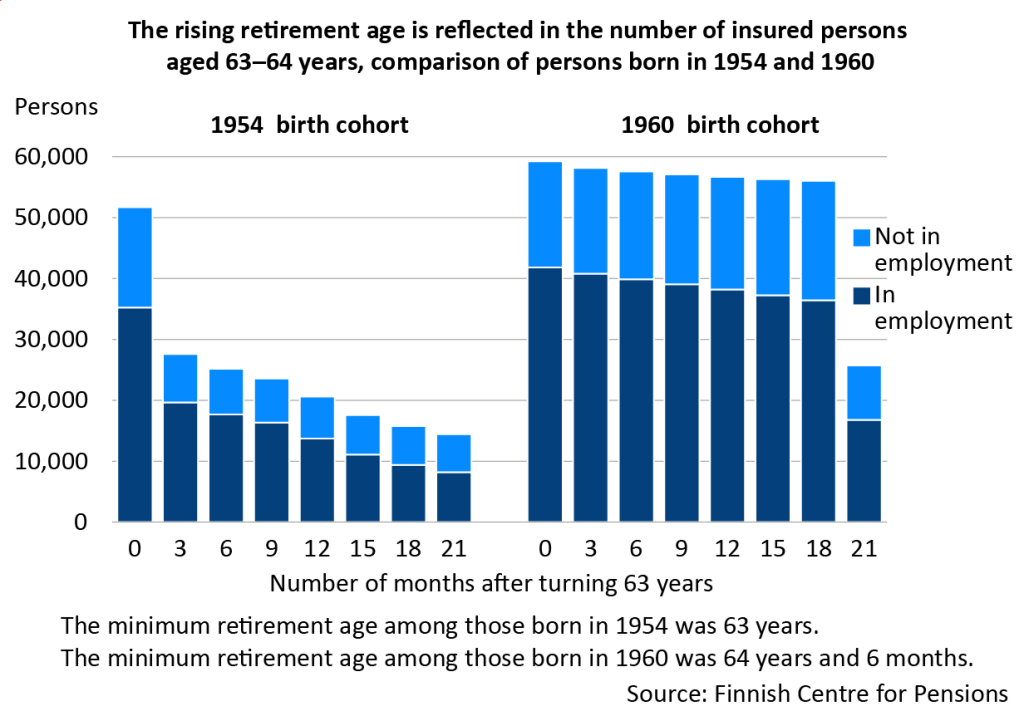
As the share of working insured persons has remained virtually unchanged up to the new retirement age, working beyond age 63 has become considerably more common.
The employment rate among 63-year-olds has risen by nearly 30 percentage points since 2016, reaching over 60 per cent in 2025. Over the same period, the employment rate among 64-year-olds has nearly doubled.
“Raising the minimum retirement age for the old-age pension has led people to continue working”, Kannisto explains.
Those with a higher income are more likely to work beyond their retirement age
Many people now continue working beyond their retirement age. Often, their earnings are higher than average.
Among those born in 1960, the median monthly earnings were €4,180 for those who continued working without drawing their pension. The median monthly earnings were €3,390 for those who retired as soon as they reached their retirement age.
“The higher people’s monthly earnings, the more likely they are to continue working beyond their retirement age. And vice versa: those with lower earnings are more likely to start drawing their pension as soon as they reach their retirement age”, Kannisto states.
Kannisto cautions against focusing solely on income.
“The prospect of additional income alone does not make Finns working beyond their retirement age. Other crucial factors include their health, ability to work and willingness to keep working, providing that working conditions support this.”
Younger generations expected to work more
Kannisto believes the rising retirement age will continue to increase the employment rate among older people.
He cites those born in 1960 as an example. The work input of this age group has risen by an estimated 30,000 working years following changes to the age limits.
“As the retirement age rises, the work input of the younger birth cohorts will continue to rise”, Kannisto estimates.
The number of people aged 63 and over who start drawing a disability pension has increased by a few thousand. This increase is mainly due to the rising retirement age: under the previous age limits, these people would already have retired on an old-age pension.
The continuously rising retirement age also poses challenges for working life.
“The oldest workers need flexibility in their final years of employment. As the retirement age rises, the declining ability to work makes it more difficult for an increasing number of people to continue working until they reach their retirement age”, Kannisto adds.
Read more