Disability pensions increasingly granted to persons over sixty

Each year, more than 17,000 Finns retire on a disability pension. A growing proportion of them are over 60 years old. Among the older workforce, the most common cause of disability is musculoskeletal disorders.
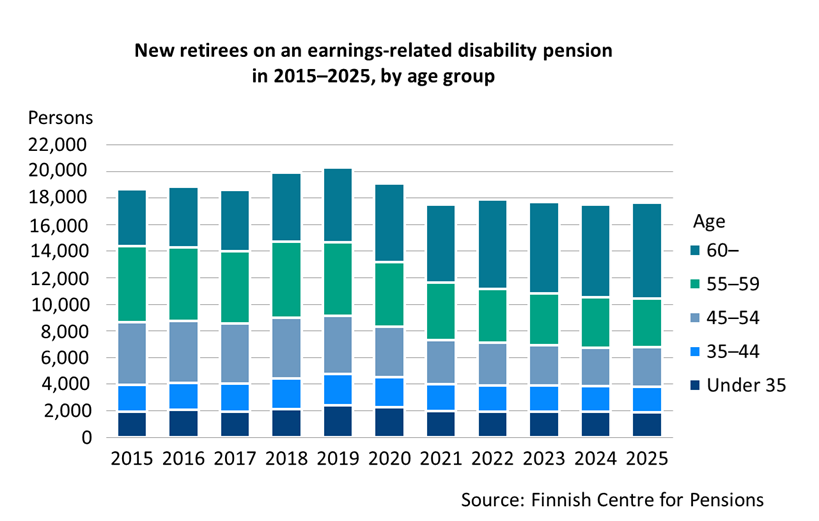
In 2025, a total of 17,650 people retired on an earnings-related disability pension. The number of disability pensions has remained stable throughout this decade. According to statistics from the Finnish Centre for Pensions, the number of new disability pensions increased by 1 per cent last year.
The causes for disability have also remained the same as in previous years.
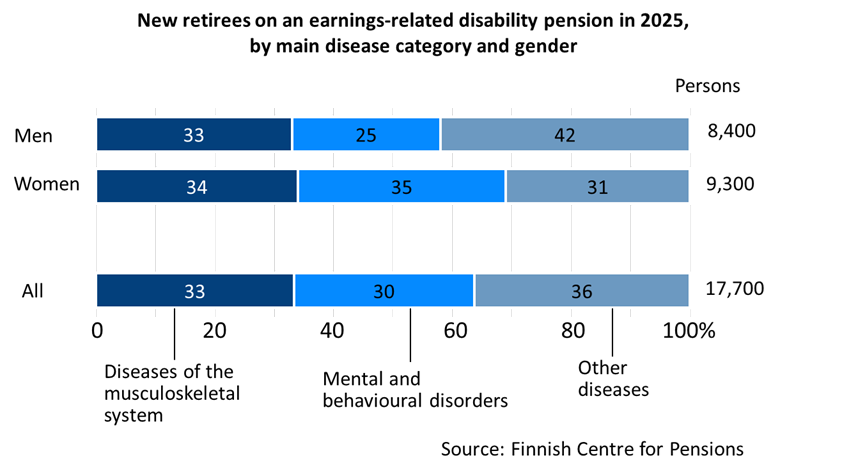
“Last year, around one in three disability pensions were granted because of musculoskeletal disorders. Less than one in three disability pensions were granted because of mental disorders”, says Statistics Planner Joonas Hautamäki from the Finnish Centre for Pensions.
Women are more likely than men to retire on a disability penson due to mental disorders.
Older recipients of disability pensions on the increase
In 2025, 7,200 people who retired on disability pension were aged 60 or over, which is more than 4 per cent higher than in 2024.
In 2020, around 31 per cent of new disability pensions were granted to people aged 60 or over. In 2025, their share had increased to 41 per cent.
“This trend is also influenced by the upper age limit for disability pensions, which has been raised by three months each year in line with the rising old-age retirement age”, Hautamäki explains.
The most common cause of disability among older members of the workforce is musculoskeletal disorders.
Low disability risk among employed Finns
In recent years, the risk of disability for working Finns has decreased. In 2025, the incidence of disability among 25–65-year-olds averaged 4.9 per mille, compared to 6.3 per mille in 2020.
The incidence rate of disability pensions indicates the risk of having to retire on a disability pension; in other words, it measures what proportion of the working-age population transitions to a disability pension within a year.
However, measuring this risk among young people is more difficult.
“Disability among young adults is a problem that is not fully visible in earnings-related pension statistics. Many young people end up disabled before their working life has even begun”, explains development manager Jari Kannisto from the Finnish Centre for Pensions.
More information